There’s something almost magical about the way watercolor behaves on paper. A single brushstroke can bloom outward, bleed into unexpected shapes, and create effects that no other medium can replicate. Unlike oil or acrylic paints, watercolor doesn’t fully submit to the artist’s control — and that’s precisely what makes it so extraordinary. The medium has a personality of its own, and learning to work with it rather than against it is one of the most rewarding journeys in visual art.
Whether you’re a beginner picking up a brush for the first time or an experienced artist deepening your understanding, exploring watercolor’s expressive qualities opens up a world of creative possibility. From the luminous transparency that makes colors sing to the unpredictable textures formed by water and pigment, watercolor painting occupies a unique place in the art world — and has for centuries.
What Makes Watercolor Painting So Unique?
At its core, watercolor is pigment suspended in a water-soluble binder, typically gum arabic. That simple formula produces some of the most breathtaking effects in all of painting. But what truly sets watercolor apart isn’t just its chemistry — it’s the relationship between the artist and the medium itself.
Watercolor is one of the few painting mediums where light comes from the paper itself, not from the addition of white paint. Artists work from light to dark, leaving areas of white paper untouched to represent highlights and bright tones. This approach demands a fundamentally different way of thinking about a composition from the very start.
The medium is also defined by its transparency. When layers of watercolor are applied over each other — a technique called glazing — the underlying colors remain visible, creating rich, luminous depth that mimics the way light filters through stained glass. This optical quality is incredibly difficult to achieve with opaque mediums.
The Core Qualities of Watercolor Paint
Understanding the fundamental qualities of watercolor paint helps artists use the medium more intentionally and expressively. These aren’t abstract concepts — they’re practical characteristics that shape every decision made on the paper.
Transparency and Luminosity
Transparency is arguably the defining quality of watercolor. Because the pigment layers allow light to pass through them and reflect back off the white paper beneath, colors appear to glow from within. This is why watercolor landscapes often feel bathed in natural light, and why watercolor portraits can capture the delicate translucency of skin with such sensitivity.
Artists can control the degree of transparency by adjusting the ratio of water to pigment. More water means more transparency; less water produces denser, more saturated color. Mastering this balance is central to expressive watercolor work.
Fluidity and Spontaneity
One of the most celebrated — and occasionally frustrating — qualities of watercolor is its fluidity. When paint is applied to wet paper, it spreads and diffuses in ways that cannot be perfectly predicted or controlled. This spontaneous quality is what gives watercolor its distinctive organic feel.
Rather than fighting this tendency, experienced watercolorists embrace it. The wet-on-wet technique, where wet paint is applied to a pre-wetted surface, creates soft, dreamlike passages that feel alive with movement. This is one of the reasons watercolor is particularly beloved for painting skies, water, and atmospheric effects.
Granulation and Texture
Certain watercolor pigments — particularly those based on minerals like ultramarine or raw umber — have a tendency to granulate, meaning the pigment particles settle unevenly into the texture of the paper, creating a grainy, almost geological effect. This quality adds remarkable visual interest and texture to a painting.
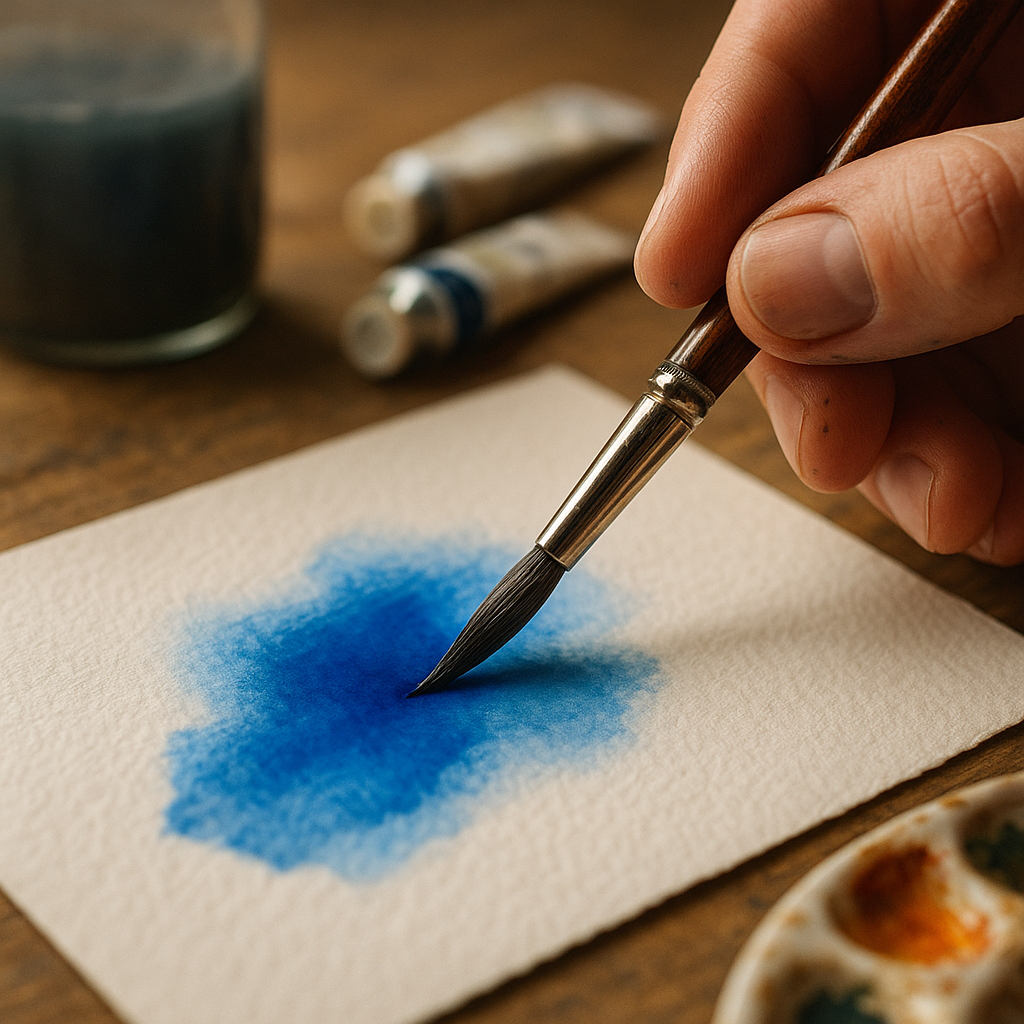
Granulation can be unpredictable, but many artists deliberately seek out granulating colors for their expressive potential. Combined with textured watercolor paper, the effect can evoke everything from weathered stone walls to stormy ocean surfaces.
Drying Shifts and the “Watercolor Bloom”
Anyone who has painted with watercolor has experienced the surprise of watching a painting dry. Colors almost always shift as the water evaporates — often becoming noticeably lighter and less saturated than they appeared when wet. This means artists need to paint with a mental adjustment built in, anticipating what the final dried result will look like.
The watercolor “bloom” — also called a cauliflower or backrun — occurs when wet paint is introduced into a drying layer, causing the pigment to push outward and form irregular, flower-like edges. While this can be an accidental nuisance, it’s also a celebrated effect that many artists use deliberately to add organic texture and visual energy to their work.
The Four Pillars of Watercolor
In watercolor education, instructors often refer to four foundational principles that underpin successful painting. These four pillars — value, color, edges, and composition — guide artists in making intentional, expressive decisions rather than simply reacting to the medium’s unpredictability.
- Value: The relative lightness or darkness of a color. Getting values right is more important than getting colors right — a painting with accurate values will read correctly even in black and white.
- Color: Understanding color temperature, harmony, and the behavior of specific pigments allows artists to make emotionally resonant color choices rather than arbitrary ones.
- Edges: Watercolor offers a unique range of edges, from razor-sharp hard edges (paint applied to dry paper) to soft, dissolving edges (wet-on-wet). Varying edges throughout a painting creates visual rhythm and guides the viewer’s eye.
- Composition: The arrangement of shapes, values, and color masses within the picture plane. Strong composition gives structure to even the most spontaneous watercolor work.
These four pillars aren’t rules to be followed rigidly — they’re frameworks that help artists understand why certain decisions work and others don’t. Expressive watercolor painting comes from internalizing these principles deeply enough to bend or break them with intention. If you’re looking to further develop your creative approach, exploring the core aspects of creativity can provide a valuable broader framework for artistic growth.
The Psychology Behind Painting in Watercolor
Many artists are drawn to watercolor not just for its visual qualities but for what it demands psychologically. Unlike mediums where mistakes can simply be painted over, watercolor requires a kind of commitment and acceptance. Once a dark wash is laid down, it’s very difficult to remove entirely. This demands confidence, decisiveness, and — perhaps most importantly — a willingness to let go of the need for perfection.
This psychological dimension is one of the reasons watercolor is frequently recommended in art therapy contexts. The medium encourages practitioners to tolerate uncertainty and find beauty in the unexpected. When a bloom appears where it wasn’t planned, or a color bleeds beyond its intended boundary, the watercolorist must decide: is this a mistake, or is this the painting telling me something interesting?
The medium also rewards a state of relaxed alertness — being focused enough to make intentional decisions, but relaxed enough to allow the paint to do what it wants to do. Many artists describe entering a flow state when painting in watercolor, where time seems to disappear and the act of painting becomes meditative. This experience can be deepened further when painting alongside other artists, where shared energy and creative exchange add another dimension to the process.
Famous Artists and the Watercolor Tradition
Watercolor has a rich and diverse history, embraced by some of the most significant artists across multiple centuries. J.M.W. Turner used watercolor to capture the transient effects of light and atmosphere with unparalleled sensitivity — his loose, luminous washes of color influenced generations of landscape painters. Winslow Homer’s watercolors of the American coast have a bold, spontaneous energy that feels remarkably modern even today.
A frequently asked question is whether Gustav Klimt used watercolor. The answer is yes — while Klimt is best known for his elaborate oil paintings and drawings decorated with gold leaf, he did work in watercolor as part of his broader practice, particularly in studies and preparatory sketches. His use of flat, decorative color and pattern in his oil work shares certain sensibilities with watercolor’s approach to transparency and layering.
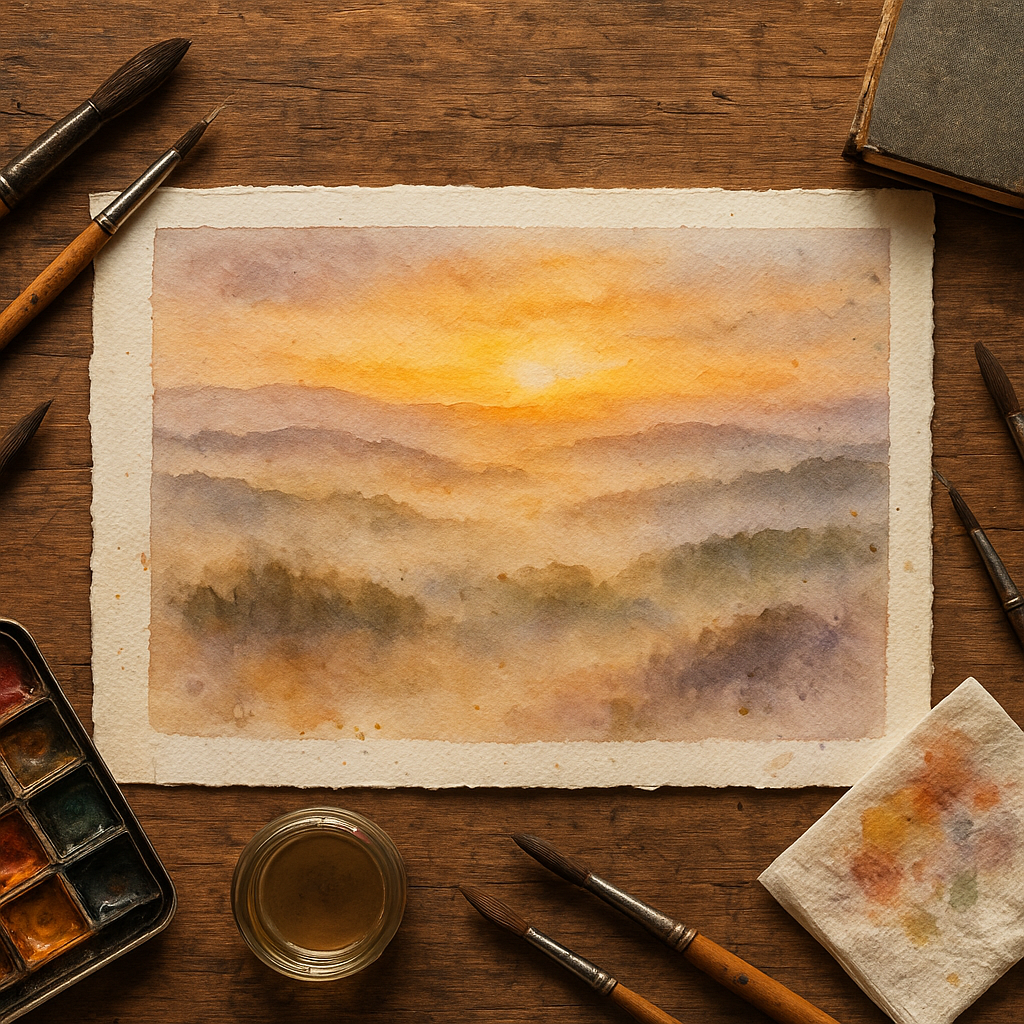
Paul Klee used watercolor extensively throughout his career, often combining it with other mediums to create works of remarkable color sensitivity and poetic imagination. His writings on color theory, shaped in part by his watercolor practice, remain influential in art education to this day.
The Golden Rule of Watercolor
If there is one principle that experienced watercolorists return to again and again, it is this: work light to dark, and preserve your whites. This is often called the golden rule of watercolor, and it stems directly from the medium’s most fundamental characteristic — that you cannot paint a light color over a dark one.
Because watercolor is transparent, a light wash applied over a dark area won’t cover it — the dark will simply show through. This means that planning must happen before the brush touches the paper. Artists identify their lightest areas first and protect them, either by painting carefully around them or by using masking fluid to reserve those whites. The darkest, most saturated areas are built up gradually through successive layers of increasingly concentrated paint.
This approach stands in sharp contrast to oil painting, where artists often work dark to light and can add bright highlights at the very end. In watercolor, those bright highlights must be planned from the beginning — which is part of what makes the medium so intellectually engaging and, for many artists, so deeply satisfying.
Essential Techniques for Expressive Watercolor Work
Beyond understanding the medium’s qualities, developing a personal expressive voice in watercolor means experimenting with a range of techniques. Some of the most useful include:
- Wet-on-wet: Applying wet paint to a wet surface for soft, diffused effects ideal for skies, backgrounds, and atmospheric passages.
- Wet-on-dry: Applying wet paint to dry paper for crisp, defined edges and precise detail work.
- Dry brush: Using a brush with relatively little water on dry paper to create broken, textured strokes that suggest texture and movement.
- Lifting: Removing wet or damp paint with a clean brush, tissue, or sponge to create soft highlights or correct areas.
- Salt technique: Sprinkling salt onto wet paint to absorb pigment in irregular patterns, creating fascinating textures that resemble snowflakes, foliage, or organic surfaces.
- Glazing: Applying thin, transparent layers of color over a completely dry previous layer to build depth and optical color mixing.
None of these techniques is inherently superior to another. The most expressive watercolor painters tend to mix approaches fluidly, choosing whichever technique best serves the emotional or visual intention of the moment.
Conclusion
Watercolor is a medium that rewards curiosity, patience, and a willingness to embrace the unexpected. Its defining qualities — transparency, fluidity, luminosity, and spontaneity — make it unlike any other painting medium, and its demand for planning and decisiveness makes it intellectually engaging in ways that many artists find deeply satisfying.
Understanding the four pillars of value, color, edges, and composition gives watercolorists a solid framework within which expressive freedom can flourish. Respecting the golden rule of working light to dark ensures that the medium’s most beautiful qualities — including the luminous glow of light coming through pigment to reflect off white paper — are preserved throughout the painting process.
From Turner’s atmospheric landscapes to Klee’s poetic color studies, the history of watercolor is rich with artists who found in this medium a perfect vehicle for personal expression. Whether you’re drawn to its meditative qualities, its technical challenges, or simply the breathtaking results it can produce, watercolor remains one of the most expressive and endlessly rewarding forms of visual art available to painters of every level.